

What Is Concrete Volume?
Concrete volume is the three-dimensional space that concrete needs to fill. It is commonly measured in cubic yards in the United States and cubic meters in metric calculations. The required quantity depends on the structure's dimensions and shape.
Accurate measurements help estimate material requirements before ordering ready-mix concrete. Uneven subgrade, varying thickness, openings and formwork dimensions can affect the final quantity.
Concrete Volume Formula
For a rectangular slab or another rectangular structure, multiply length by width by thickness or depth. Convert all dimensions to the same unit before multiplying.
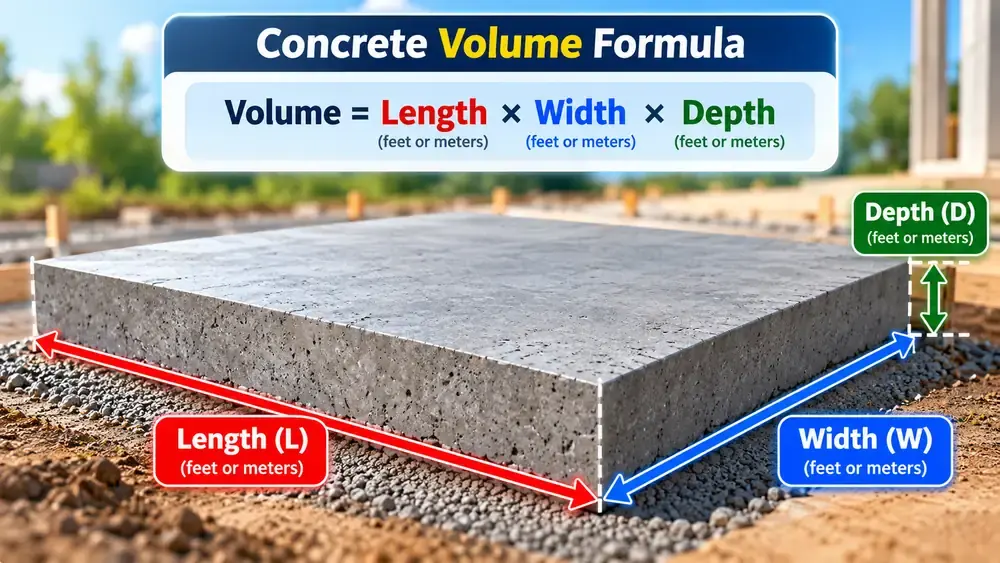
Basic Formula
Volume = Length × Width × Depth
Feet × feet × feet = cubic feet
If dimensions are measured in feet, the result is cubic feet. Divide cubic feet by 27 to obtain cubic yards. If dimensions are measured in meters, the result is cubic meters.
Concrete Volume Units and Conversions
Concrete suppliers in the United States commonly sell ready-mix concrete by the cubic yard. Some plans and calculators use cubic feet or cubic meters. Correct conversions are essential for reliable estimates.
| Conversion | Equivalent |
|---|---|
| 1 cubic yard | 27 cubic feet |
| 1 cubic meter | 35.3147 cubic feet |
| 1 cubic yard | 0.7646 cubic meters |
| 1 foot | 12 inches |
Convert Cubic Feet to Cubic Yards
Divide cubic feet by 27. For example, 54 cubic feet divided by 27 equals 2 cubic yards. To convert cubic yards to cubic feet, multiply by 27.
Cubic yards = cubic feet ÷ 27
Cubic feet = cubic meters × 35.3147
Example: Concrete for a 10 × 12 Foot Slab
Suppose a rectangular slab is 10 feet long, 12 feet wide and 4 inches thick. First convert the thickness from inches to feet.
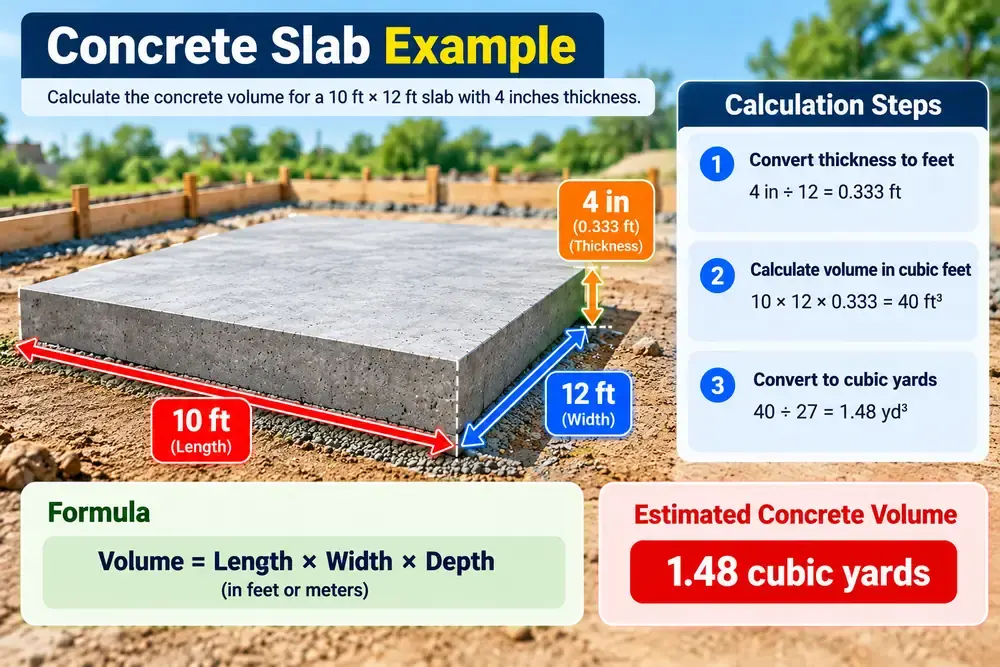
| Measurement | Value |
|---|---|
| Length | 10 ft |
| Width | 12 ft |
| Thickness | 4 ÷ 12 = 0.3333 ft |
Step 1: Calculate cubic feet
10 × 12 × (4 ÷ 12) = 40 cubic feet
Step 2: Convert to cubic yards
40 ÷ 27 ≈ 1.48 cubic yards
Estimated volume: 1.48 yd³
This is the geometric volume before any additional ordering allowance. Verify actual form dimensions and site conditions before placing an order.
Calculate your own slab dimensions →Concrete Volume for Beams and Columns
Rectangular beams and columns use the same basic volume principle, but their dimensions represent different sides of the structure.
Rectangular Beam Example
A beam is 12 feet long, 1 foot wide and 1.5 feet deep.
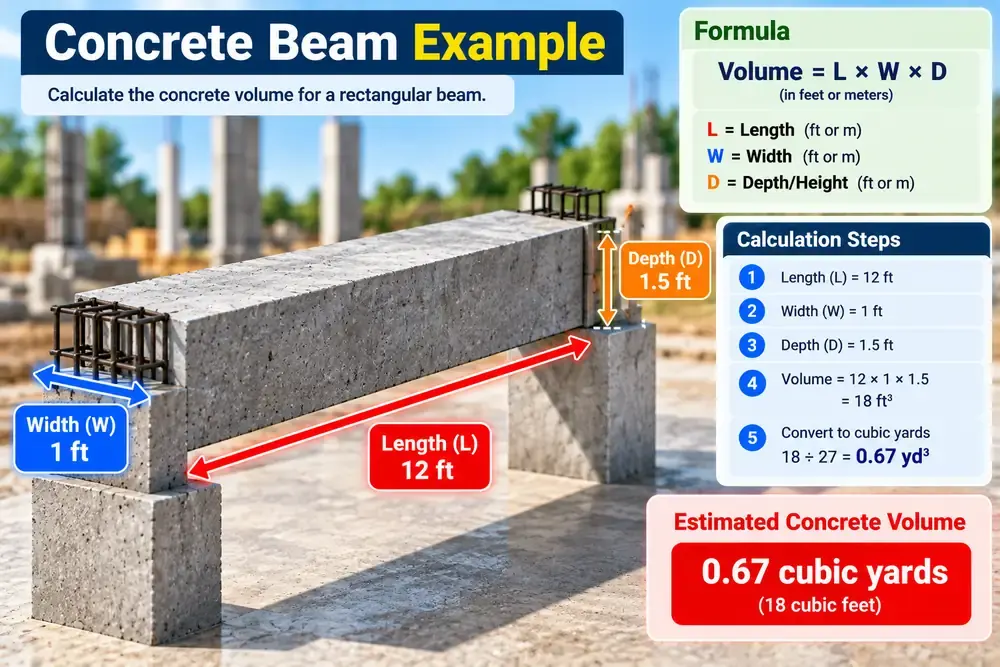
Volume = length × width × depth
12 × 1 × 1.5 = 18 cubic feet
18 ÷ 27 ≈ 0.67 cubic yards
Rectangular Column Example
A column is 1.5 feet wide, 1.5 feet deep and 10 feet tall.
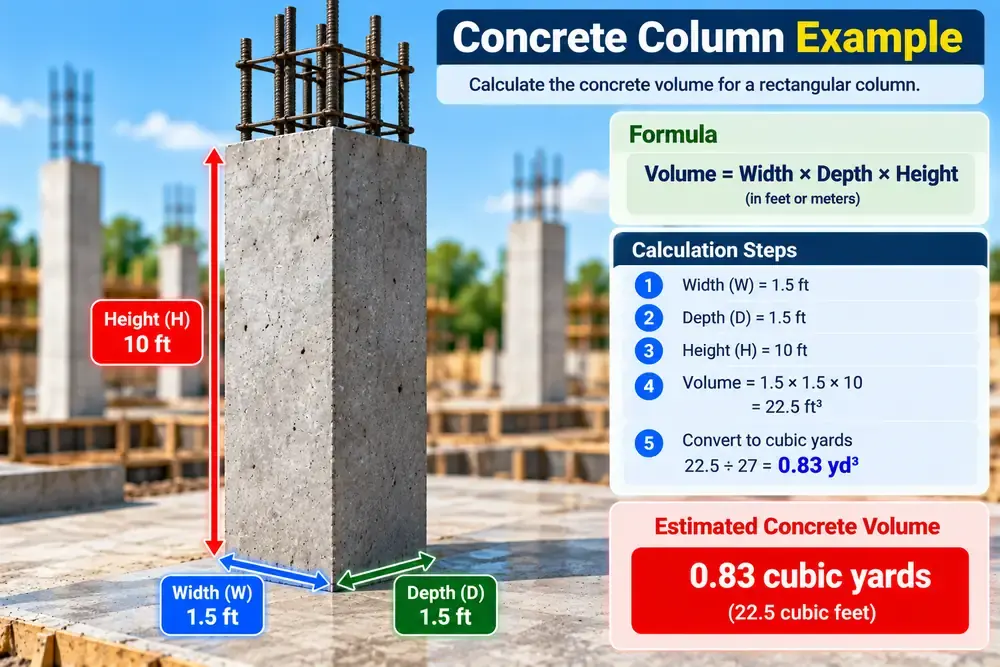
Volume = width × depth × height
1.5 × 1.5 × 10 = 22.5 cubic feet
22.5 ÷ 27 ≈ 0.83 cubic yards
Circular Column Formula
For a cylindrical column, multiply pi by the radius squared and then by the height. The radius is half the diameter.
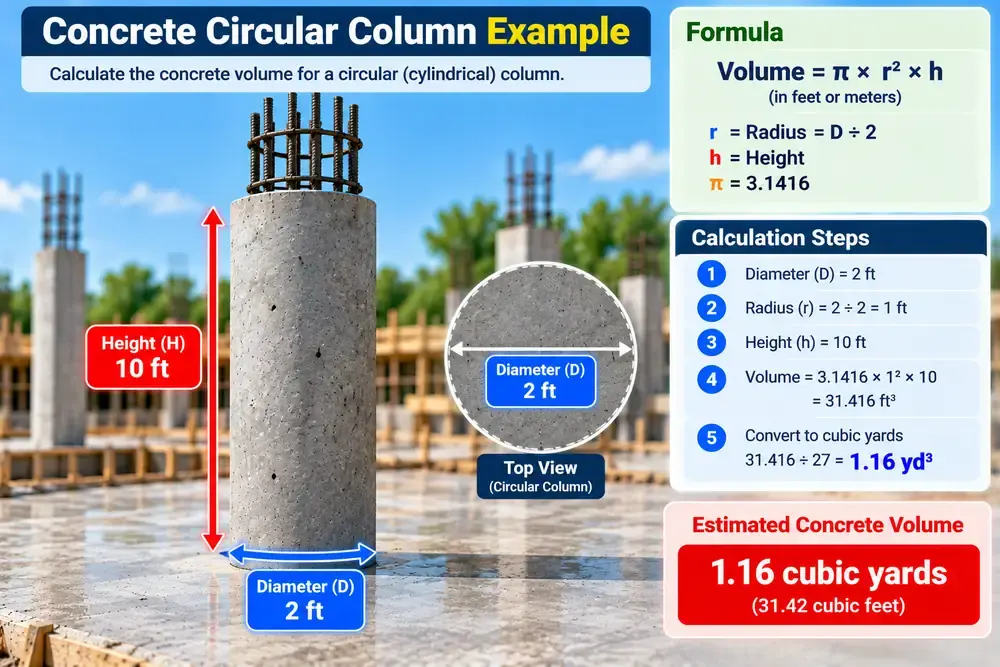
Volume = π × radius² × height
When adding volumes for connected structural sections, avoid counting overlapping regions twice.
How Much Extra Concrete Should You Order?
The calculated volume describes the space to be filled. The amount ordered may vary because of uneven subgrade, formwork variation, spillage and placement conditions.
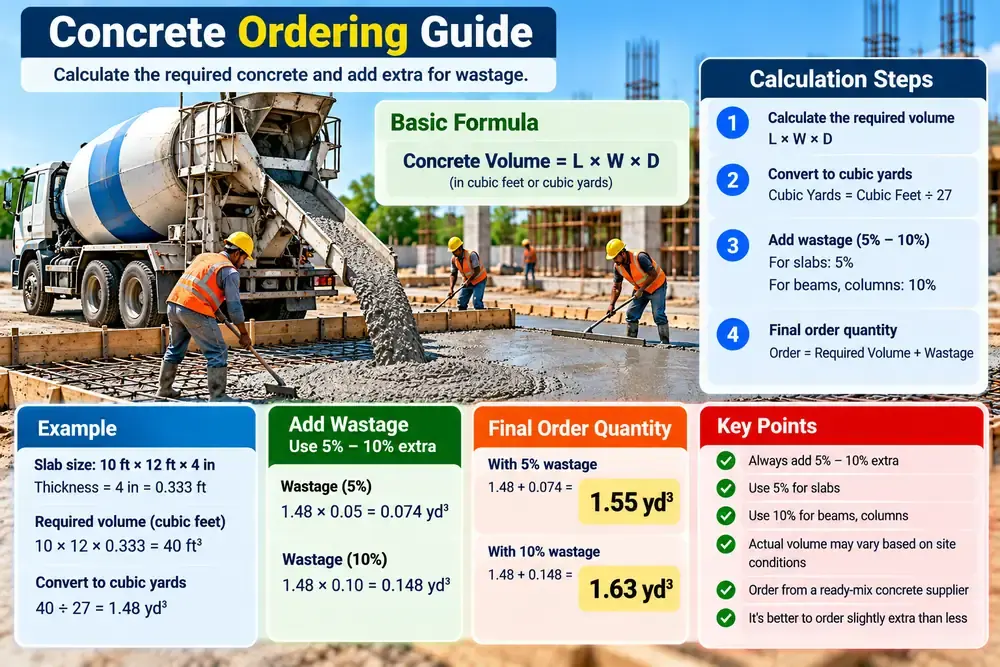
For illustration, adding 10% to the 40-cubic-foot slab example gives 44 cubic feet, or about 1.63 cubic yards. This is a calculation example, not a universal recommendation to add 10% to every order.
Before ordering concrete
- Measure the actual length, width and thickness.
- Check the base and formwork for uneven areas.
- Confirm supplier ordering increments and delivery requirements.
- Follow project specifications and professional instructions.
Common Concrete Volume Calculation Mistakes
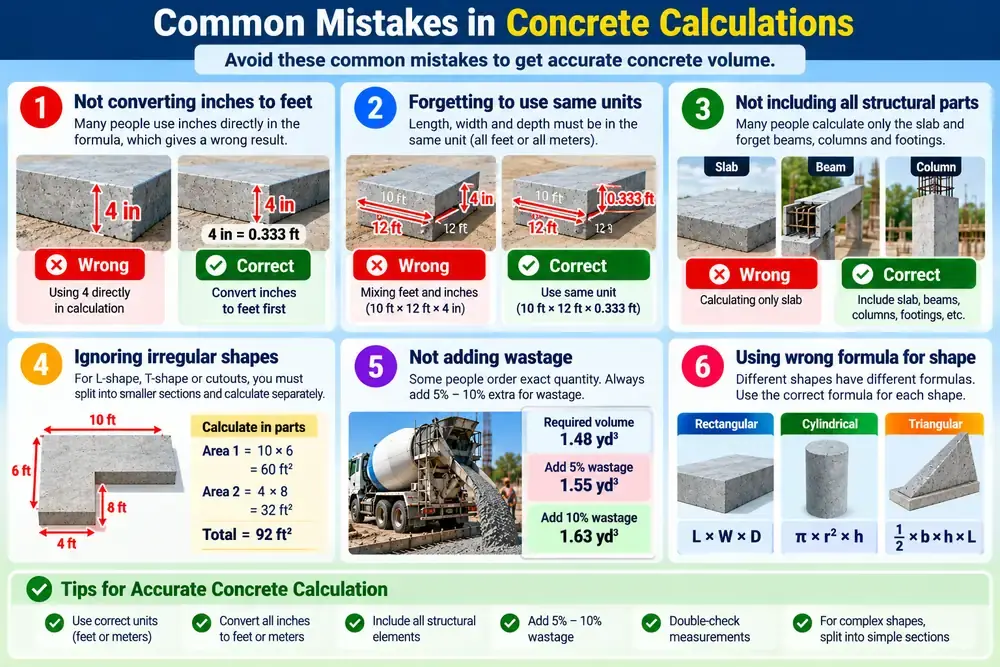
Mixing feet and inches
Convert inches to feet before multiplying dimensions measured in feet. For example, 4 inches equals 4 ÷ 12 feet.
Confusing square and cubic units
Square feet measure area, while cubic feet and cubic yards measure volume. Concrete volume calculations also require thickness or depth.
Using incorrect dimensions
Use the dimensions specified for the actual pour, including planned thickness and formwork measurements.
Treating the estimate as an exact order
The calculation is based on the dimensions supplied. Confirm site conditions and delivery quantities with your supplier.
Calculate Concrete for Your Project
Use the CornerSpan concrete calculator with your own dimensions to estimate the required volume.
Open Concrete Calculator →Further Technical Information
For additional concrete construction information, consult established technical organizations and verify that the guidance applies to your project.
- American Concrete Institute (ACI) — technical information and concrete construction resources.
- National Institute of Standards and Technology (NIST) — measurement and standards information.
These links provide general reference resources. Consult relevant technical documents for project-specific requirements.
Concrete Volume FAQs
How many cubic yards of concrete do I need for a 10 × 12 slab?
For a 10 × 12 foot slab that is 4 inches thick, the geometric volume is 40 cubic feet, or approximately 1.48 cubic yards before any additional ordering allowance.
How do I calculate concrete in cubic yards?
Multiply length, width and thickness in feet to calculate cubic feet. Divide the result by 27 to convert cubic feet to cubic yards.
How thick should a concrete slab be?
Required thickness depends on the intended use, loads, ground conditions and project specifications. Follow the project design rather than choosing thickness from a volume calculator alone.
Can I calculate concrete volume in cubic meters?
Yes. Convert length, width and depth to meters and multiply them. The result is cubic meters. One cubic meter is approximately 35.3147 cubic feet.
Should I order extra concrete?
The allowance depends on measurement accuracy, subgrade conditions, formwork and placement losses. Check actual site dimensions and confirm the order quantity with your supplier.
How do I calculate concrete for a circular column?
Use the cylinder formula: volume equals pi multiplied by the radius squared and the height. Keep the radius and height in the same unit.
Related Construction Guides
Explore related construction measurement topics on CornerSpan.