

Construction Calculator
Concrete Calculator
Estimate concrete volume and common material requirements for slabs, walls, footings, columns, stairs, and other construction work.
Concrete Calculator Tool
Concrete Calculator
Calculate concrete volume, cement bags, sand, aggregate, water, and material cost.
Choose a concrete form
Choose the type of concrete work.
Enter Length × Width × Depth / Height
Dimensions
Enter the size of your concrete work.
Quantity
Number of identical sections
Concrete volume = Length × Width × Thickness × Quantity
Concrete volume is calculated from Length × Width × Thickness × Quantity. Material quantities are estimates based on the selected mix ratio and should not replace a project-specific structural mix design.
Concrete Calculator
Your Result
Ready to Calculate
Enter your concrete dimensions and tap Calculate to see the required concrete volume and materials.
Worked Example
Concrete Calculation Example
See how the concrete calculator estimates volume and material quantities for a simple slab.
Example Inputs
Concrete Form
Slab
Length
5 m
Width
4 m
Thickness
0.15 m
Quantity
1
Concrete Mix
M20 — 1 : 1.5 : 3
Step-by-Step Calculation
Calculate wet concrete volume
5 × 4 × 0.15 = 3.00 m³Calculate dry material volume
3.00 × 1.54 = 4.62 m³Calculate total mix ratio
1 + 1.5 + 3 = 5.5Calculate cement volume
4.62 × (1 ÷ 5.5) = 0.84 m³Calculate sand quantity
4.62 × (1.5 ÷ 5.5) = 1.26 m³Calculate aggregate quantity
4.62 × (3 ÷ 5.5) = 2.52 m³Calculate cement weight
0.84 × 1440 = 1210.91 kgCalculate cement bags
1210.91 ÷ 50 = 24.22 → 25 bagsCalculate estimated water
1210.91 × 0.50 = 605.45 LEstimated Result
Concrete Volume
3.00 m³
Dry Material Volume
4.62 m³
Cement
25 bags
Sand
1.26 m³
Aggregate
2.52 m³
Water
605.5 L
Important
This is a quantity-estimation example using the calculator's standard assumptions. Actual cement, sand, aggregate and water requirements can vary with the project-specific mix design, material properties, moisture, aggregate grading and construction requirements.
FAQ
Frequently Asked Questions
Common questions about concrete volume, mix ratios, materials, water requirements, and material cost.
Concrete Calculator Guide
About This Concrete Calculator
Estimate concrete volume, material quantities, and approximate material cost for slabs, footings, walls, columns, stairs, and other common concrete projects.
This free concrete calculator helps estimate the amount of concrete required for common residential and construction projects. Enter the dimensions of the area, choose your measurement units, and the calculator estimates the required concrete volume.
Depending on the selected calculation options, you can also estimate cement, sand, aggregate, water, material quantities, waste allowance, and approximate material cost.
The calculator is designed to make concrete quantity estimation easier before purchasing materials or preparing a project estimate. Results are estimates and should be checked against project drawings, specifications, and local construction requirements.
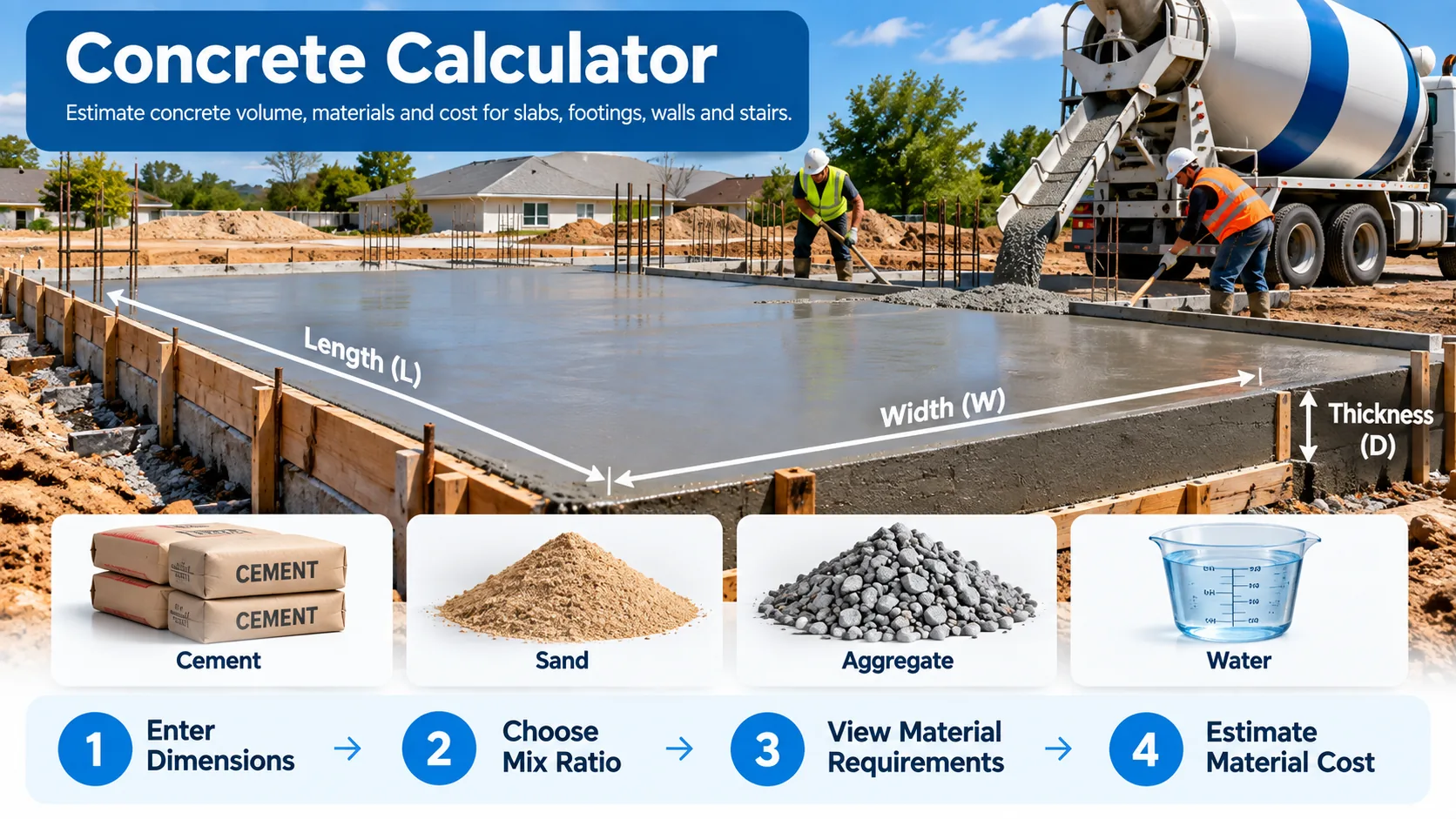
What Can You Calculate?
Use the calculator to estimate common concrete quantities and material requirements for construction planning.
How to Use the Concrete Calculator
Follow these steps to calculate the estimated concrete quantity for your project.
Choose the type of concrete work, such as slab, wall, footing, column, or stairs.
Enter the length, width, and depth or height of the concrete section.
Select the appropriate measurement unit for each dimension.
Enter the quantity if you are calculating multiple identical concrete sections.
Choose a concrete mix ratio or enter a custom mix where supported.
Enter local material prices if you want an approximate concrete material cost.
Review the calculated concrete volume and estimated material requirements.
How Concrete Volume Is Calculated
For a basic rectangular concrete section, the volume is calculated by multiplying length, width, and depth.
Concrete Volume = Length × Width × Depth
If the same concrete section is repeated, the calculated volume is multiplied by the required quantity. The calculator then converts the result into the appropriate volume unit.
Concrete Material Estimate
The calculator estimates material quantities from the entered dimensions, quantity, and selected concrete mix ratio. Cement, sand, aggregate, and water estimates depend on the calculation assumptions and mix settings selected in the calculator.
Cement estimates may use a standard cement density and bag size, while water estimates can use a selected water-cement ratio. These assumptions are intended for preliminary estimating rather than final concrete mix design.
Material prices vary by location, supplier, transportation, material quality, quantity purchased, and market conditions. Cost results should therefore be treated as estimates rather than final quotations.
Related Construction Calculators
Explore other CornerSpan calculators that can help with construction measurements and quantity planning.
Supported Measurement Units
The calculator supports common construction measurement units so you can enter dimensions using the units normally used for your project.
Accuracy and Estimation
Calculator results are intended for preliminary quantity and cost estimation. Actual concrete requirements can vary because of project dimensions, mix design, aggregate grading, moisture, compaction, formwork, wastage, construction methods, and site conditions.
For structural concrete, always follow the project-specific engineering design, construction drawings, specifications, and applicable local standards.
Concrete Standards and Professional Reference
For professional concrete design, specifications, testing, and construction guidance, consult recognized engineering organizations and the standards applicable to your project.
American Concrete Institute (ACI)Planning Tip
Before ordering concrete or construction materials, verify the calculated dimensions, openings, quantities, waste allowance, mix requirements, and local material prices. For major structural work, use the project drawings and professional engineering specifications as the final reference.